How to Properly Label AI-Generated Content? The European Commission's New Code of Practice and What It Means for You
The following text was co-created and deployed to the Blog using the AI tool Google Antigravity. As the author/editor, I bear full responsibility for its accuracy.
The boom of generative artificial intelligence has brought a revolution in content creation, but it also carries new risks related to misinformation and loss of public trust. The European Commission has therefore recently (June 10, 2026) published the final Code of Practice on the marking and labelling of AI-generated content.
This document serves as crucial guidance for complying with the transparency obligations mandated by Article 50 of the European AI Act, which takes full effect in this area on August 2, 2026. Let's look at what this code brings in practice, who it applies to, and how to prepare for the new rules.
Who Do the Rules Apply To?
The code distinguishes between two primary roles in the artificial intelligence ecosystem:
- Providers (Developers): For those who develop AI systems, the code focuses on technical compliance. They must ensure that generated content (text, images, video, and audio) is marked in a machine-readable way (e.g., via invisible watermarks, metadata, or standards like C2PA).
- Deployers (Users): This includes all of us who use AI tools in business, marketing, or daily communication. The code offers clear guidelines on how to inform the public by labeling content, especially when publishing synthetic content (deepfakes) or AI-generated text that has not undergone human review or editorial control.
How and Where to Label Content?
If you create synthetic content (text, images, video, and audio), the European Commission has prepared a set of free icons that you can use for clear visual labeling. You can download these icons directly from the European Commission's Digital Strategy portal.
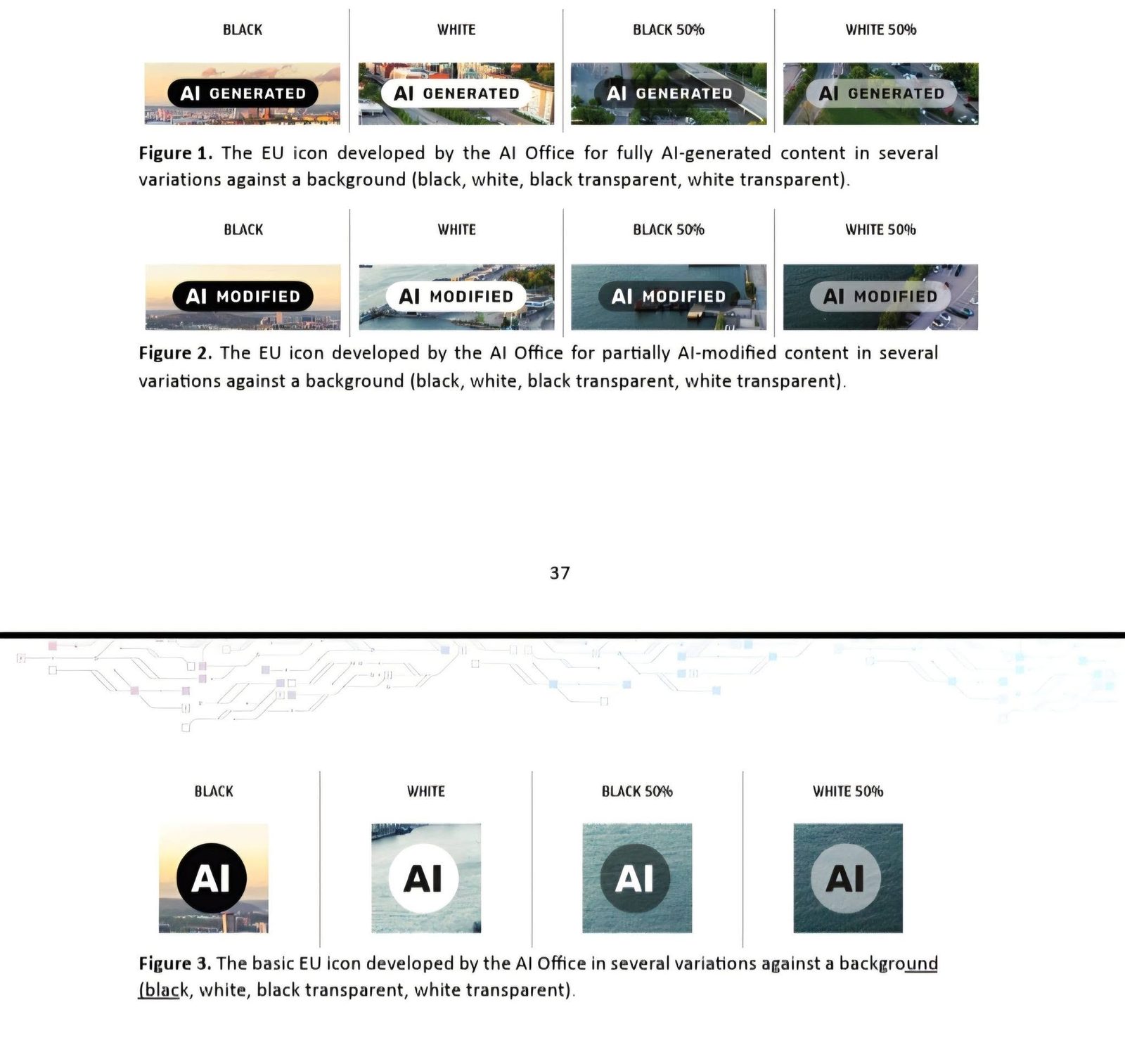
For individual formats, the following recommendations apply:
- Text, Video, and Audio: For these formats, it is best to clearly state at the very beginning or in the description that the content was generated using AI tools.
- Specific Tool: It is also recommended to mention which specific tool was used (e.g., Google Gemini, ChatGPT, Midjourney, etc.). This increases credibility with your audience and contributes to transparency.
What Are the Risks of Non-Compliance?
Although the Code of Practice is voluntary, ignoring these practices carries two major risks:
- Legal Fines: Complying with transparency obligations under Article 50 of the AI Act is a legal requirement. Signing and adhering to the code is the easiest way for companies to demonstrate to regulators that they are in compliance with these legal obligations.
- Reputational Damage: This is a very real and immediate risk. Today's audience highly values transparency. If it is revealed that you published pure AI-generated content as your own original work without labeling it, you risk damaging your reputation and losing the trust of clients and followers.
Conclusion: Prevention is Cheaper
Ultimately, it will be much less expensive and less risky to transparently label generated content than to try to find ways to bypass AI detection systems. Labeling AI content is quickly becoming the new standard for professional communication.
Are you implementing AI tools in your business and want to ensure that your communication fully aligns with the requirements of the AI Act and the new Code of Practice? Schedule a non-binding meeting with me. I will be happy to review your setup and propose appropriate recommendations.